Sunday, November 15, 2020

Teacher Training Week #2

 Hey ! 

We did our second lesson and it was about collaboration skills and of-course English Language Teaching. This lesson was even more interactive and more fun. We firstly try to make sense of a word cluster and then wrote a short story with those words. We worked with groups of three. I must say I wasn't expecting such good short stories in such a limited time. Then we listen a song which contains all the words of the word cluster. Be careful of my word choice please we only "listened". It was a lovely song called "The A Team"  written by Ed Sheeran. Then with the groups that we wrote a short story we designed a video clip for the song. Me and my group members almost got the same as video that originally made, another group got even closer than us. It was enjoyable as a group work and I would love to try that on a language class. It was difficult at first but when we decide what to do and how to do it we moved quickly. The second activity that we worked on was a murder case. This time we worked with groups of four, each one of us had different cards that contained a name and what they did before and during the time of murder. We also had a print of the place and an empty time table with character names. This activity was much harder because we didn't know what information other team member hold. We try to share it but it got too complicated, then Melda hoca said everyone could read one by one what information we hold. I had the blueprint and the time table printed so I wrote down what my group members told me to paper and we checked which one had witness and which one did not and also which one had time to sneak out for murder. We had 15 minutes but we cracked the case in time ! In addition to this my group was the only one who find the murderer. This activity because of its more complex nature demanded more organize work, and clear communication.

 Thirdly we talk about ELT and a worldwide problem of ELT. The discrimination between native and non-native speaker language teachers. With the references to Introducing Global Englishes by Galloway, & RoseThe writers ( Galloway and Rose ) suggest that Global Englishes as a new approach that puts the native and non-native speaker language teachers on the same status. The main argument of our discussion was the necessity of a "standart language and standart accent". I don't believe that we should impose children to change their accents for another language. The language is a communicative tool and a language that has a global status should be more tolerant to other types of accents. The factors that determine the better teacher are not their exposure to the language when they are young but the factors that make any kind of teacher good. I also don’t think nativeness is a quality of an ideal teacher but the general public believes it is the case. The paper is also talks about that there are some barriers to innovations in English language teaching, we also discuss these factors. The writers listed five elements which are ; lack of materials, language assessment, teacher education, attachment to “standard” English, and lastly teacher recruitment practices. I do agree that there is a lack of variety in the materials. Even if they suggest different methodologies for the class most of them are not attainable. As English is the global language and people want to learn it to have more options, language assessment has a big part in their learning. I do agree with the writers that it has a wash-back effect on the objectives of many language classes. Third factor, the teacher education, again I agree with the writers. The education for teachers is  improving and raising awareness of teachers will help the innovations in ELT. I also agree that one must stop looking upon English as something that cannot and should not be changed. I also agree that the teacher recruitment practices should change. The implication of one can teach the language better because they are born into the language is an absurd thought.  


Here the link to the song that I mentioned : https://www.youtube.com/watch?v=UAWcs5H-qgQ

How would you design the video clip for this song ?


Saturday, November 7, 2020

"Integrating 21st Century Skills Training With Project Based Learning to Cultivate EFL Pre-service Teachers' Professional Skills

Hello!

Yesterday was the first day of  "Integrating 21st Century Skills Training With Project Based Learning to Cultivate EFL Pre-service Teachers' Professional Skills."( It is so long so from now on we will call this teacher training) After filling lots of forms and self reflection questions I was so excited to finally getting started to the lesson but before I that I need to tell you about the readings that I did and how they change my opinion. So this week's subjects were Critical Thinking Skills and English as a Global language. First reading was "Critical Thinking Skills for Education, Students Critical Thinking: Why is it Important and what is it Anyway?'' It was very short and very useful paper. It contains all the terminology you need to know and it gives small explanations about these terminology. It really did not change my opinion on anything what did change my opinion is this reading that I did "Why a global Language" by Crystal. There is a certain fact that English is a global language but have you ever thought why ?  Crystal argues that  contrary to popular beliefs what made English a global language were not reasons like ease of learning, its size of vocabulary, or its association with a great culture or religion but simply the power of the people who use this language to establish the global language and the economical power to maintain and expand it. He also says "with the technological developments English became the number one language that fuelled new mass entertainment industries which had a worldwide impact." So  I learned that it was not about how many people do speak the language, but rather its influence on world with its military power, economical power, technological power and cultural power, all combined makes a language the global language in our case this language is English. Now, let's talk about the lecture. It was more interactive than I thought. In the first part of the lesson we created a presentation collaboratively, we did group work together and shared our findings , we had a competition about the critical thinking skills( I came out 6th :( ), it was a lot of fun. In the second part of the lesson we talk about our understanding of English, we did a lot of speaking and our teachers contribute us with some facts. So to the end of the lesson it was very interactive. I'm so excited for the next lesson !

P.S : I'm sharing the link of the video we watched for the lesson by David Crystal. I advise you to watch. https://www.youtube.com/watch?v=5Kvs8SxN8mc


Wednesday, May 27, 2020

Thinglink

Hi everyone ! 

I'm here with a new website that surely will increase classroom performance! The Thinglink! This website is great in many ways. Firstly, it creates interactive learning with technology with images, videos and VR experience. 
Secondly, it is really easy to register, and right after it gives an introduction video on how to use the website. After the video you can see this page; 
You can take a look at the inspiring project ideas, there are a lot of good materials to be learned and when you click the ''My Media'' will see this;


It is a wall that enables you to see, edit and share your works. I must say I was not expecting images to be so clear when I uploaded them but they were really good preserved. I created a image interaction but I will be surely using this app in my classes to teach all kinds of subject in a more fun way ! I just loved this app...
Here is my interactive image; https://www.thinglink.com/scene/1323577121271971842

Wednesday, May 20, 2020

Augmented Reality


Have you ever heard the term Augmented Reality ?

It sounds similar to Virtual Reality, and I was not familiar with the term or the concept couple months ago. It sounded like alternative reality or representation of something that is digitally created. And I was not totally wrong. So today we are going to talk about Augmented Reality.


'' Augmented reality (AR) is an interactive experience of a real-world environment where the objects that reside in the real world are enhanced by computer-generated perceptual information, sometimes across multiple sensory modalities, including visual, auditory, haptic, somatosensory and olfactory.''

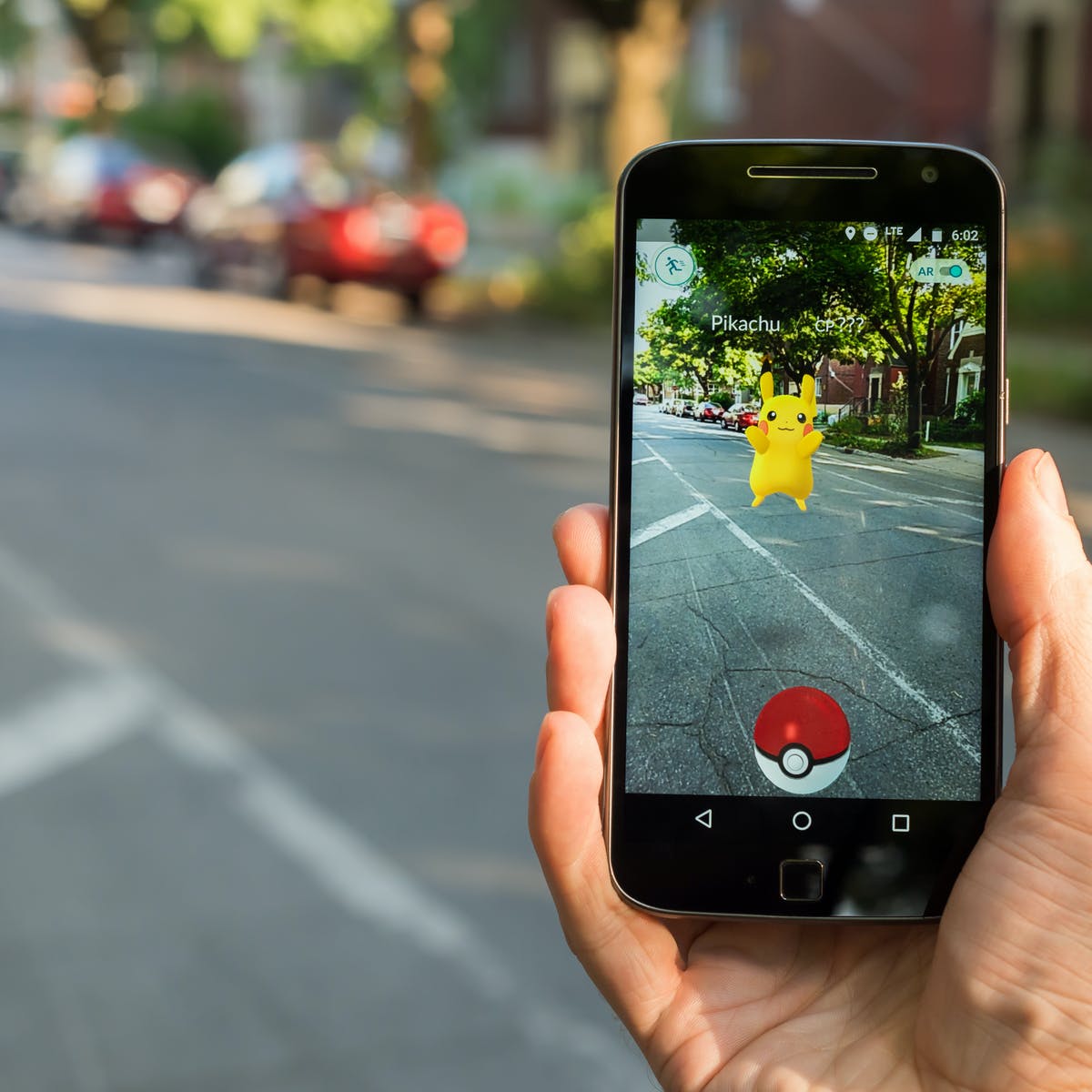
It is the textbook definition of the term and the context. It has to subcategory; marked-based and markerless. In markerless, the object that you choose appears in any area you hold your tool’s camera while in marker-based one, you need to scan a specific image for a specific object which is used in education the most. You may remember the game ''Pokemon Go'' where pokemons appear in front of the camera in three dimension version and you could catch them. Yeap that was too AR! 
It can be really fun to introduce to students in the class. However, I believe it will eventually be a part of virtual reality or replaced with virtual reality as VR offers so much more.

Monday, May 18, 2020

Two New Models of Teaching TPACK and SAMR


I want to mention two new model that can be helpful to language learning. First one is Technological Pedagogical Content Knowledge, TPACK. It ‘’attempts to identify the nature of knowledge required by teachers for technology integration in their teaching, while addressing the complex, multifaceted and situated nature of teacher knowledge’’. It is a model that enables teachers to use their knowledge of content, pedagogy, and technology to use in a way that enhances students learning. The TPACK framework was introduced by Punya Mishra and Matthew J. Koehler. It was their concern that while trying to teach with the technology of 21st century, which is a whole other expertise, teachers tend to concentrate on one of the knowledge more than others. TPACK is a combination of what teacher know, how they teach and how teacher uses the role of technology to enable better learning. For example while learning about global warning, students can explore the three dimension charts of the causes and then create their own solutions, and then they could share their solution with a field expert. This has all three components and gives more than one perspective to acquire knowledge. 

The other model is SAMR, introduced by Ruben Puentedura. ’’SAMR’' stand for Substitution, Augmentation, Modification, and Redefinition. SAMR provides a framework to show the impact of technology on teaching and learning, it is like a guide for teachers to use of technology to create activities for classroom content. This activities advice to be design in a way that will uncover students’ creativity and also enable students to interact with each other’s discoveries. In Puentedura’s own words ‘’ …where you are using technology as a gateway for social practice of explanation. ‘’ It is designed as a peer mentoring like evaluation. Students are taking the lead of their own learning, they are the ones who create and not the ones who sit down and watch. These two models are designed for using the technology in a way that enhance the students’ learning. They can be useful for language learning and also for other areas of the education.

You can visit Ruben Puentedura's blog here; http://hippasus.com/blog/

Sunday, May 17, 2020

Language Learning Apps

Hi, today rather than introducing you new websites that can help create materials for language or other classes, I will be introducing language learning apps. I mentioned this before, how the century shaped our understanding of school, this apps offers language teaching in not classes but online. 
Let's start with Busuu. It is an app offers 12 different languages' course and materials. User can purchase more content with money but Busuu offers free materials too. I have used Busuu to learn basic Russian before my course starts. I did not purchase any content and it was not very helpful for me as it was not start with the alphabet. However, after completing a section of the language course you can write a paragraph about the topic you just learnt and/or record your voice and pronunciate a sentence and post it only your given page. With his the native speakers of the language can help you to fix your expressions or pronunciation. This native speakers are not field experts they are just born into that language and trying to learn a new language themselves. This kind of peer correction can really help one to be better. I recommend this app on the level of this aspect, but it would be good to remember its free to use materials are not so good.

The second app is Duolingo. It has three languages which are ; English, German and Russian. Also there is a not that French will be there soon too. The graphic of the app and website, and how smoothly it works are the reasons why I liked this app. Like Busuu, it has free to use materials and courses and payed courses I have not bought the payed content however this app also gives 7 days of free trial for premium account. Which is great to discover. One problem that I have seen while using this app is that the language test to determine the level of your language if you are not a beginner in the language is quite easy. My test turned back 100/100, and no complex sentence or translate was asked. So I'm not sure if it has a good ranking system. But if you want to start learning one of these three languages you can use this app and it has 7 days free trial!

Sunday, May 3, 2020

Virtual Reality!


Virtual Reality excites me more than anything else, I could say. So what is it ?


''Virtual Reality (VR) is the use of computer technology to create a simulated environment. Unlike traditional user interfaces, VR places the user inside an experience. Instead of viewing a screen in front of them, users are immersed and able to interact with 3D worlds. By simulating as many senses as possible, such as vision, hearing, touch, even smell, the computer is transformed into a gatekeeper to this artificial world.''

One of the most important one that technology changed the understanding of brick builds to everywhere around us. People do not need to go to school to receive education or go to a library to read a book and even they do not need to read a book to obtain knowledge anymore. People all around the world became teachers because the meaning we except is not dictated anymore it is socially constructed and reinvented, with the opportunities given by technological developments. This is quite basically how the perception changed around the traditional education. And virtual reality takes this into the next step. Creating an environment for learning on a non existing place. In today's world it did not advanced like I dreamed it to be however, it creates an interactive learning. It is not just limited with their interaction but also it creates different ways to give students the necessary input throughout the different sources. For example the topic of animals, it is not possible to bring animals to the class and teach them but we can show their natural habitats, their place in food chain via virtual reality glasses. It will make learning much more fun and we give the input not just visually or voice based but with all the things they have in their natural form, closest they can be to real life experience.